

IMAGINE THE FUTURE: walking into the room with a patient and feeling fully prepared to encounter whatever issue is thrown at you. In the toolbox, practitioners have the world of research and the entirety of the patient’s history at their fingertips. As they talk with the patient, they see in real time how the patient’s history, family history, lifestyle, and work environments impact the patient. The displays that they are viewing are through augmented reality through spectacles or contact lenses. Practitioners no longer have a physical computer or computer monitor in their clinic.
As they look through the testing occurring during the examination, they can see how each normal and abnormal finding relates to the conversation that was just had with the patient and how it relates to the trends seen in the patient’s history. Eyecare practitioners are alerted to systemic causes or implications that could be a contributing factor. They may note a trend that matches a genetic trait not yet known to the patient.
As they develop a treatment plan with the patient, they are able to take into account the history of the patient’s compliance, what measures might need to be taken to get a medication or device approved by the patient’s insurance, and the likelihood that the patient will move forward with that treatment based on their past behaviors. Before concluding the evaluation, the patient can have a digital copy of the recommendations, including why they are important and what the outcome will be if they choose or decline to move forward. As the encounter concludes, the provider should take 20 seconds to review the chart notes and sign them as they move on to the next patient.
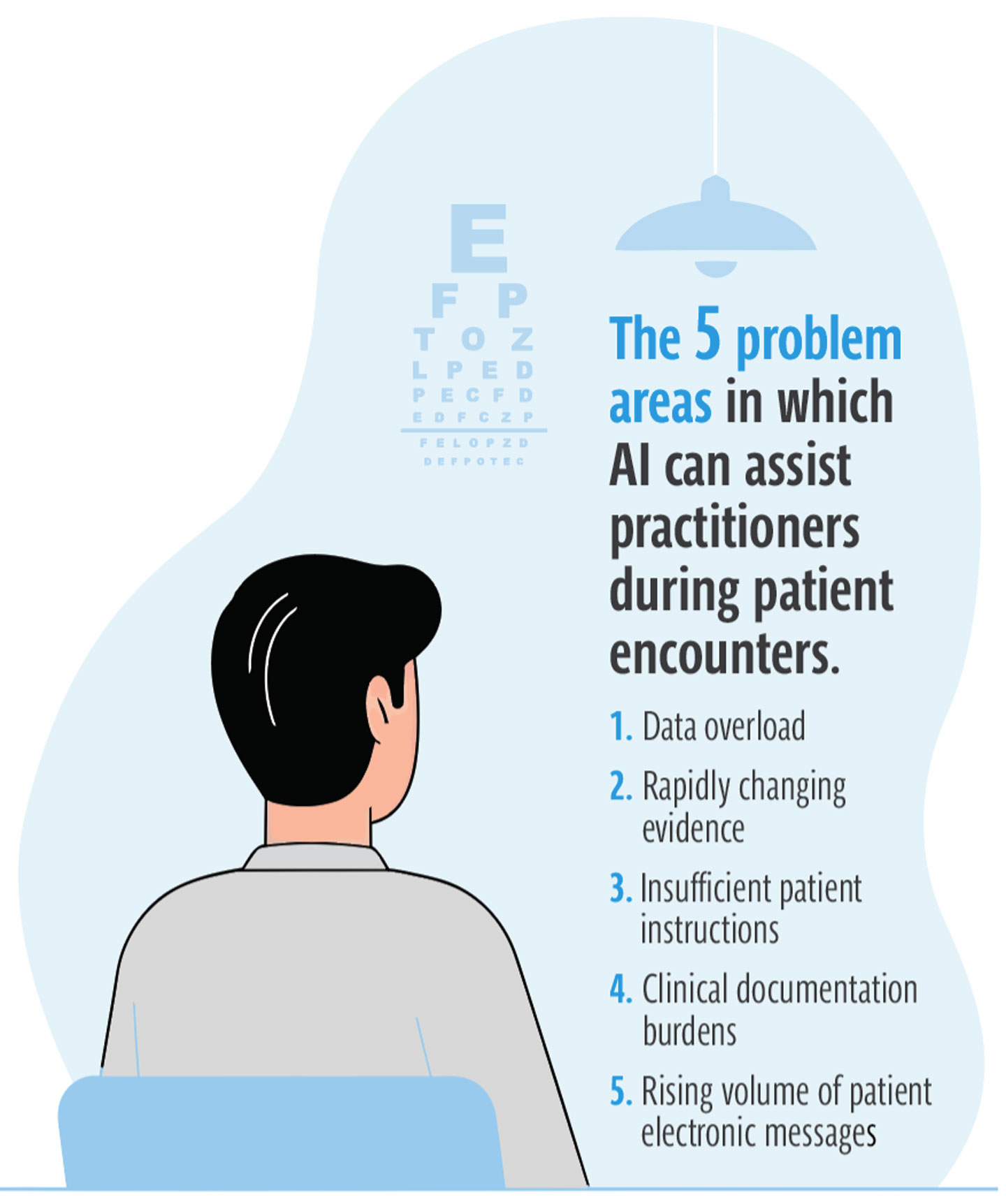
The future I am presenting is not here yet, but with the help of artificial intelligence (AI), we might just get there. A recent article utilized a hypothetical patient story to demonstrate how generative AI could be used in practice to alleviate some of the burdens practitioners encounter (Yang et al, 2025).The 5 problems they discussed look very similar to issues frequently encountered in the exam room (Figure 1). With the use of generative AI, the authors demonstrated how many of the burdens that were encountered could be lifted.
The clinic of our future still has some obstacles to overcome. The 2 biggest are interoperability of medical records and solid AI-generated documentation platforms. As we navigate improvements in technology, compliance, and privacy, AI can transform how we see patients and how our patients get a comprehensive approach to their healthcare. This future doesn’t require us to change our clinical skills; it is a future that provides tools at our fingertips to accurately diagnose, communicate, and ensure proper follow-up for patients.
References
1. Yang B, Lee JJ, Tsai T, Sattler AL, Shah S, Smith MA, Lin S. Transforming the primary care journey with generative AI: a foundation model to boost efficiency, quality, and engagement. J Gen Intern Med. 2025;41(3):836-840. doi:10.1007/s11606-025-09716-y