


SPECIALTY CONTACT LENSES are medical devices that require specific care, replacement, and monitoring to reduce risk of complications. Recommendations for compliant behavior vary greatly, depending on the ocular condition and lens type, which needs to be tailored for each individual patient. This case highlights changes that can cause issues over time when periodic follow-up appointments are missed.
A 15-year-old male who has high astigmatism originally presented for scleral lens fitting after failing soft and corneal GP lenses. He was fit with 16.5 mm freeform scleral lenses. The fit of both eyes met the optimal fitting standard of adequate central corneal clearance without landing zone compression or edge lift. The patient was able to achieve 20/20 vision OU after mild power adjustment using over-refraction. He was prescribed 0.9% NaCl saline for filling his lenses prior to application and a hydrogen peroxide care system for nightly cleaning and disinfection, which included a rub step. After his final follow-up, he was advised to return in 1 year for a contact lens check and to keep his comprehensive eye exam appointments with his local optometrist.
The patient failed to return for 3 years. When he finally reported, he had no complaints. However, his visual acuity measured OD 20/200 and OS 20/20. Slit lamp examination showed severe lens deposits and nonwetting of both lenses (Figure 1). Interestingly, he had significant buildup of mucin balls underneath his left scleral lens with corresponding dimple veiling of the cornea that was observed after lens removal (Figures 2 and 3).
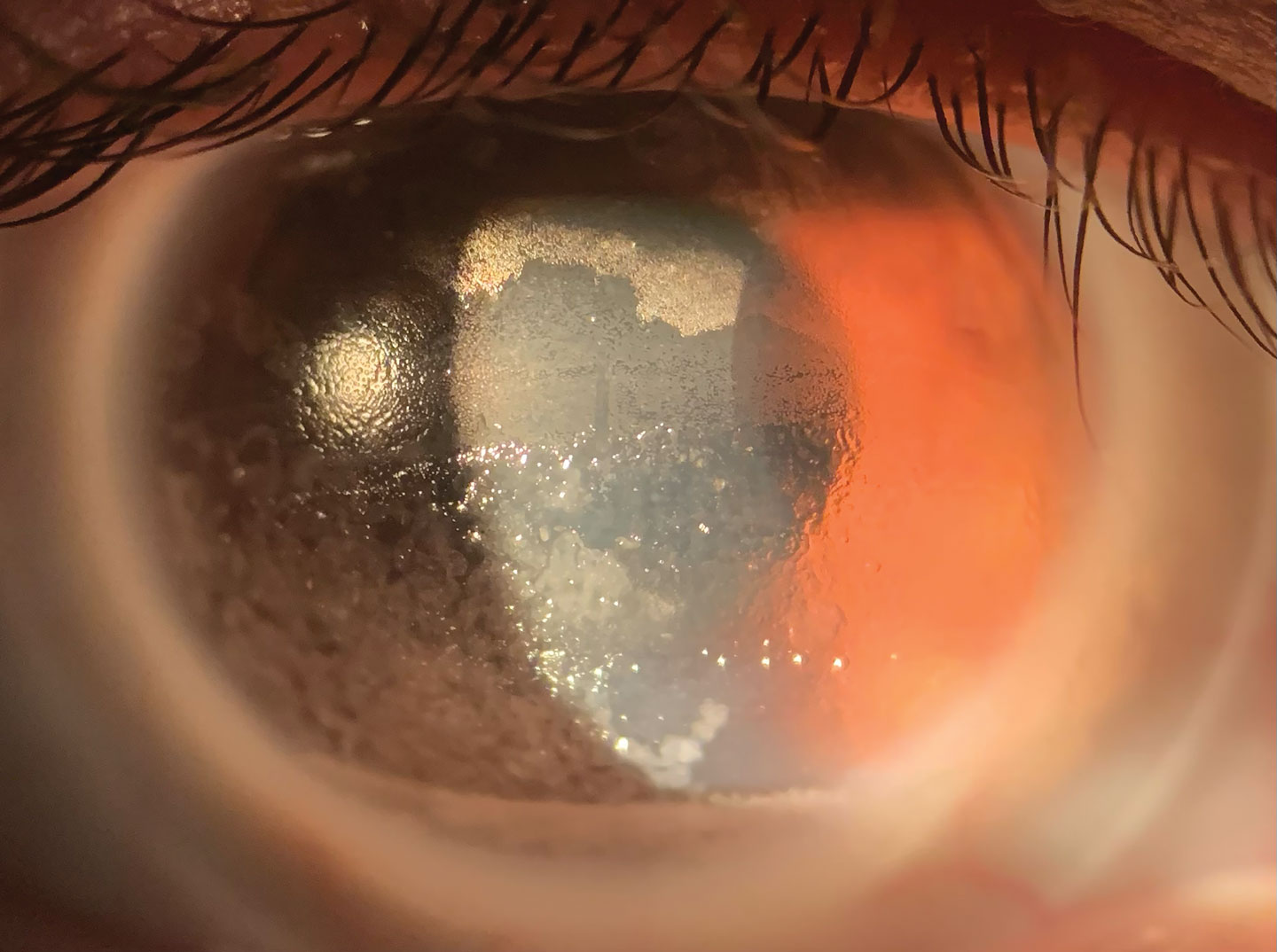
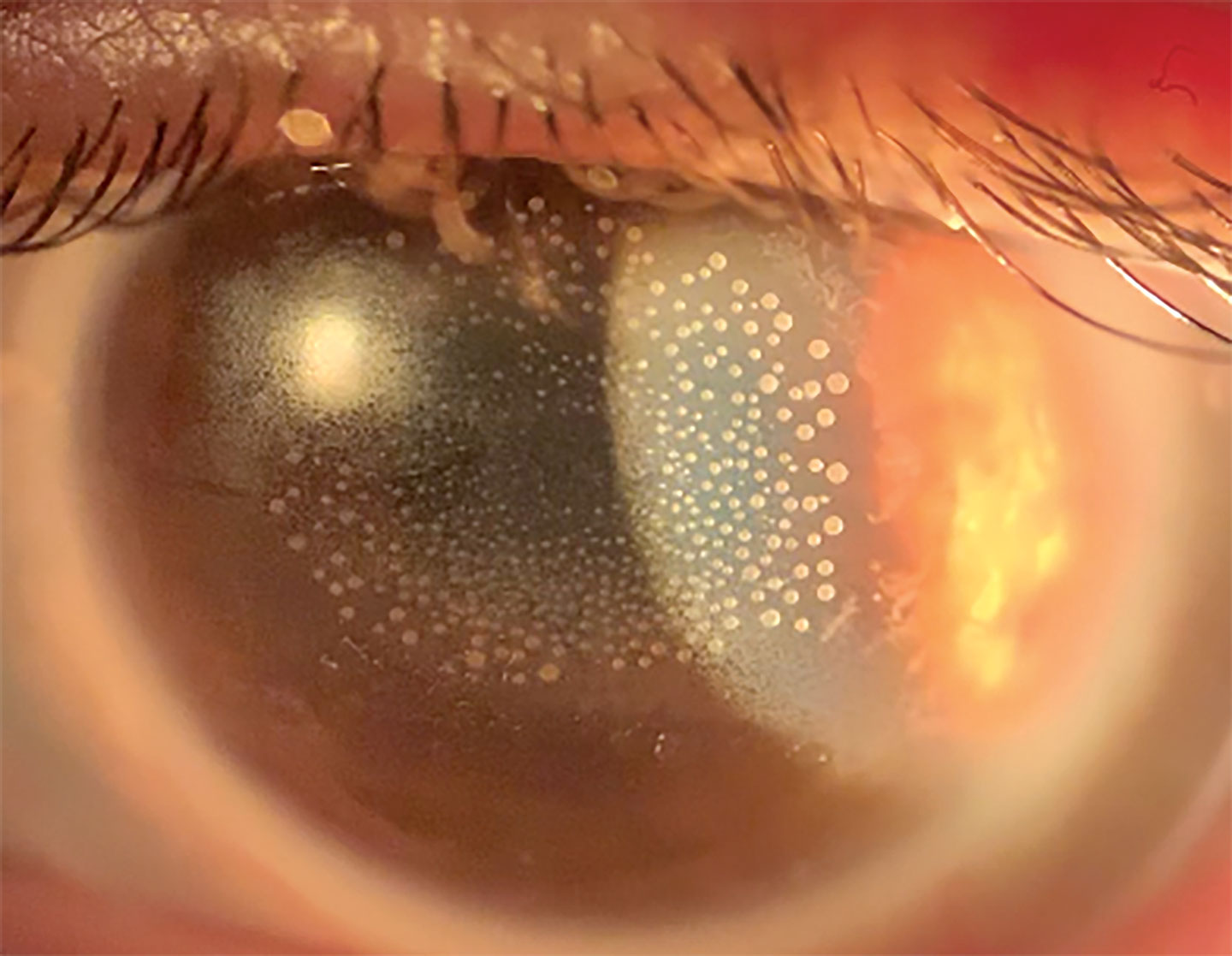
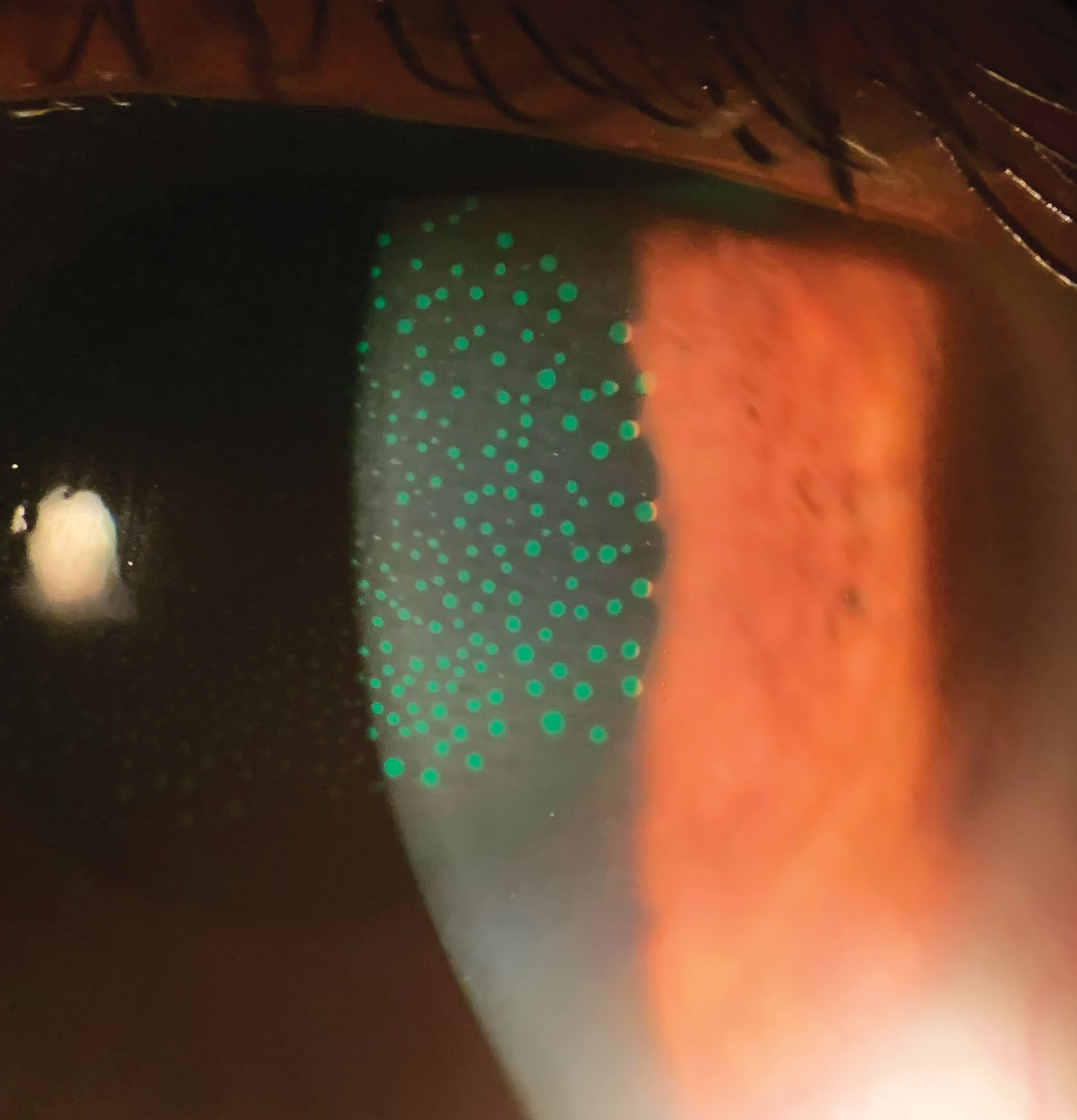
Scleral lens fit assessment showed that his lenses had chronically settled and that he had almost no measurable corneal clearance. Replacement scleral lenses were ordered increasing the sagittal depth 200 microns. He was re-educated about compliance and care and scheduled for a 3-week check.
At his return visit, his vision had improved to OD 20/25 and his left eye remained at 20/20. The new lenses demonstrated adequate corneal clearance with a clear fluid reservoir. At a 6-month follow-up, his scleral lenses showed mild deposition and small over-refraction of both eyes. His lenses were replaced annually with the addition of a polyethylene glycol treatment to improve wettability. He was advised to restart a rub step during nightly disinfection.
This case highlights the numerous complications that can result when patients fail to follow up, especially if they are physiologically prone to lens deposition and nonwetting. The presence of mucin balls in this patient’s eyes could indicate that he was sleeping overnight with his lenses on. Although many patients can successfully use their scleral lenses for 2 to 3 years, this patient requires more frequent replacement to maintain wettable, deposition-free lenses.