


AS WE CONTINUE OUR CELEBRATION of Contact Lens Spectrum’s 40th anniversary, this month we are reminded of contact lenses’ interesting regulatory journey, which is described in a special commemorative edition of Contact Lens Spectrum (Figure 1). This journey certainly provoked lots of discussion along the way, particularly when it came to differences in regulation based on contact lens material type. Although the debate surrounding contact lens regulation may have evolved, the topic continues to influence how we prescribe contact lenses today.
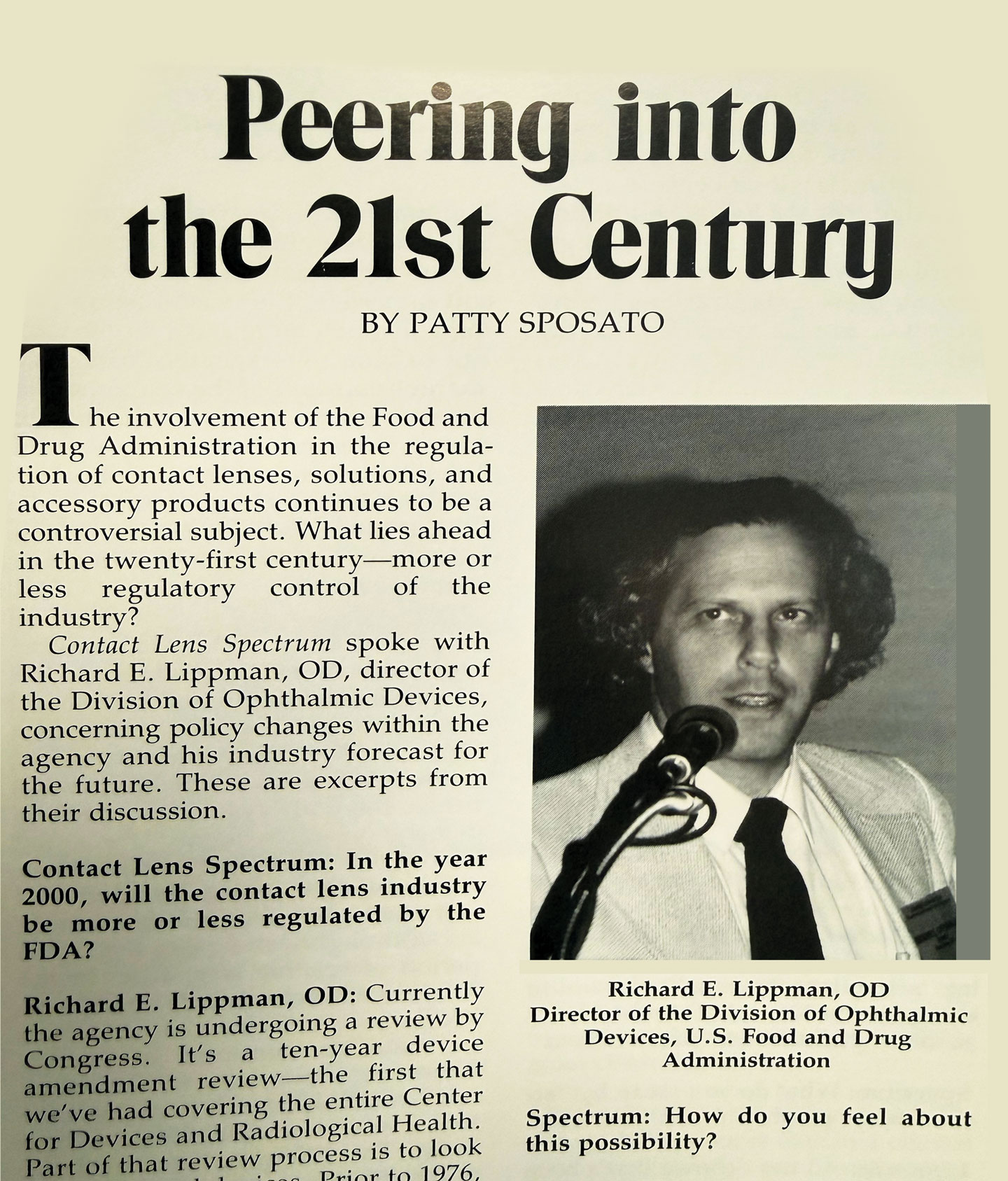
The regulatory landscape transformed dramatically with the Medical Device Amendments of 1976, which classified contact lenses as medical devices under the purview of the US Food and Drug Administration (FDA). This pivotal shift established distinct regulatory pathways, including both Class II and III medical device categorizations. Historically, polymethylmethacrylate (PMMA) lenses faced minimal regulatory oversight compared with new oversight associated particularly with soft contact lenses; this sparked intense debates over clinical safety standards, premarket approvals, and manufacturing controls.
Today, those foundational debates resonate in modern eye care. Regulatory oversight shapes critical clinical decisions, from navigating the legal implications of off-label use to enforcing prescription verification under the Contact Lens Rule. Further, global regulatory harmonization (or lack thereof, in some instances) continues to redefine the speed at which practitioners can access cutting-edge contact lens technologies.
As smart contact lenses, drug-eluting delivery systems, and advanced myopia management modalities enter the clinical pipeline, the intersection of regulatory policy and clinical practice remains as dynamic as ever, ensuring patient safety and innovation advance together.