


THIS REPORT marks a quarter century of consecutive annual reports in Contact Lens Spectrum that continue to document global contact lens trends. It reflects the efforts of a team of optometrists, ophthalmologists, and others who manage the collection of contact lens prescribing data across their countries or regions. Data are collected via paper forms or an online survey, with the request that participating practitioners (who might be optometrists, ophthalmologists, or opticians, depending on local regulations) provide prospective information about the 10 patients they fit with contact lenses following the commencement of the project each year.
Information is recorded about the following aspects of each contact lens fit: age and gender of the patient; lens material, design, replacement frequency, and wearing modality; the anticipated wearing period of the lenses (as days per week); and the care system recommended. A weighting system is assigned to each fit based on the volume of fits performed by each practitioner, calculated based on the date range provided for the fits reported.
Key Wearer Information
In 2025, data relating to at least 100 contact lens fits were reported for 24 countries (Table 1). Information about fits in 5 other markets was also received, but the low number of fits reported prevents inclusion in the annual report. For the included markets, 11,264 fits were analyzed with more than 1,000 fits reported for Japan and the Philippines. The average age at fitting was 34.7±15.5 years (mean ± standard deviation). Figure 1 shows how age at fitting has varied over the duration of this project. In general, rigid lenses and refits are associated with older patients.
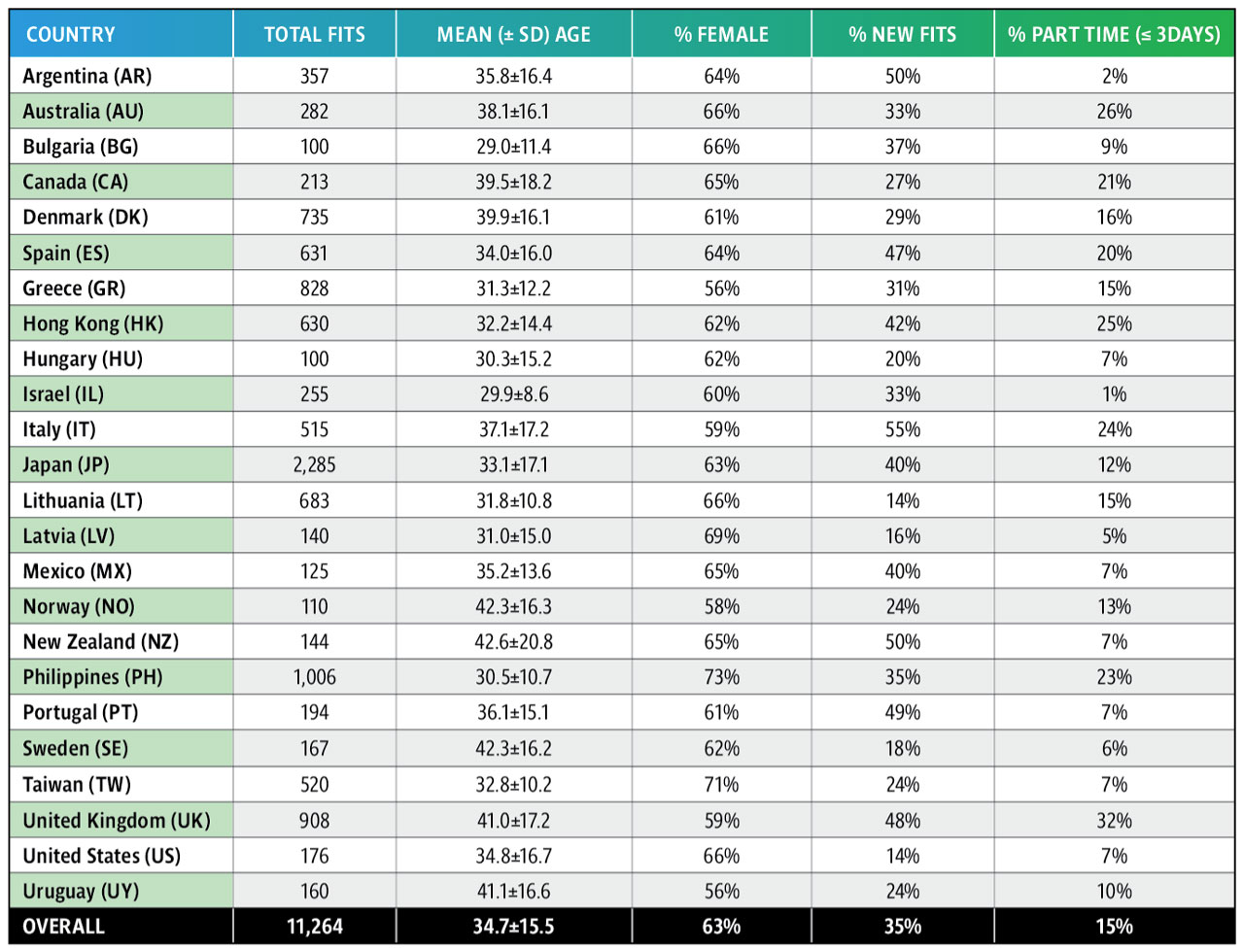
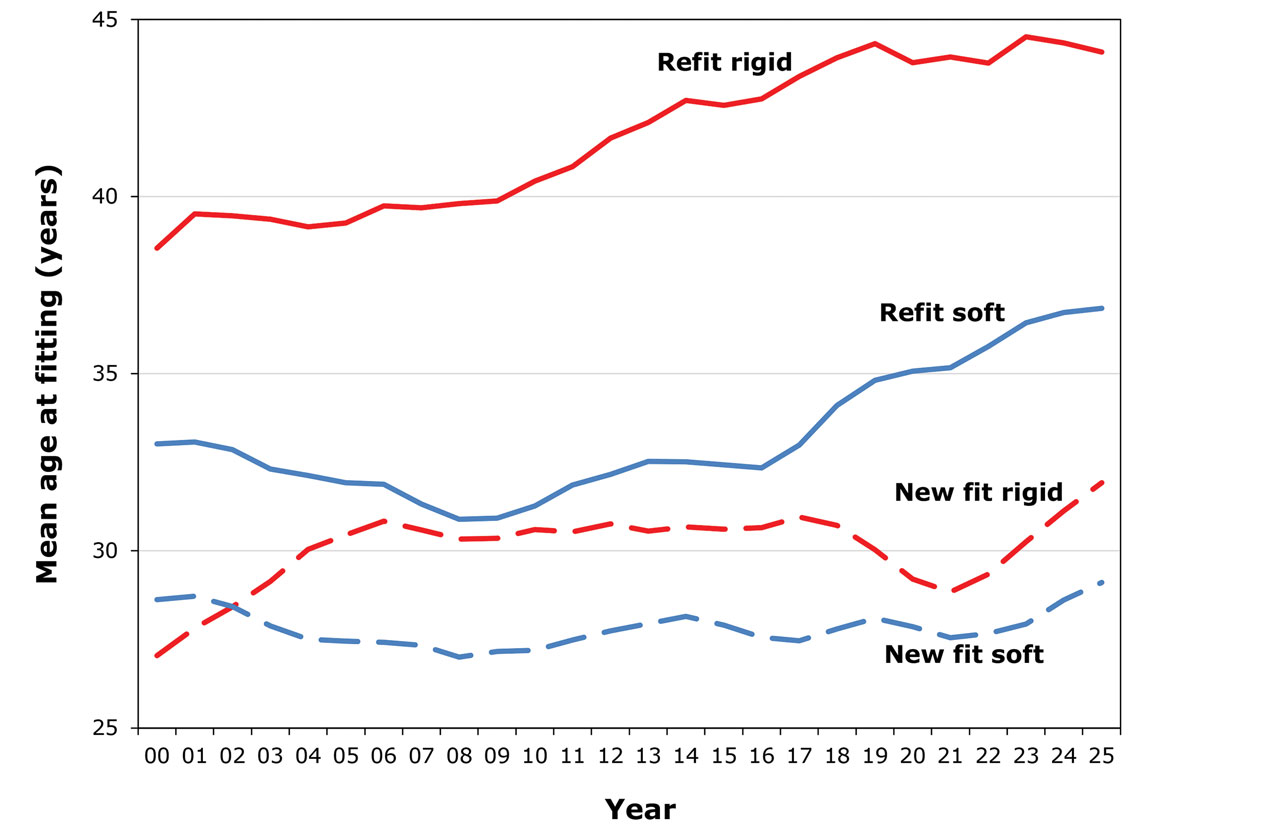
The average age at fitting of new fit patients (no previous or recent contact lens experience) has remained broadly similar over the life of this study (about 28 years for soft lenses and 30 years for rigid lenses), but the average age of refit patients has increased and is now about 37 years for soft lenses and 44 years for rigid lenses. In 2025, 5 markets reported that average age at fitting was greater than 40 years: Norway, New Zealand, Sweden, the United Kingdom, and Uruguay. As in previous years, about two-thirds of contact lens wearers were female. Also noted for 2025: 35% of patients were designated as new fits and a large majority of patients (90%) were fitted with lenses to be used on a full-time basis (at least 4 days per week).
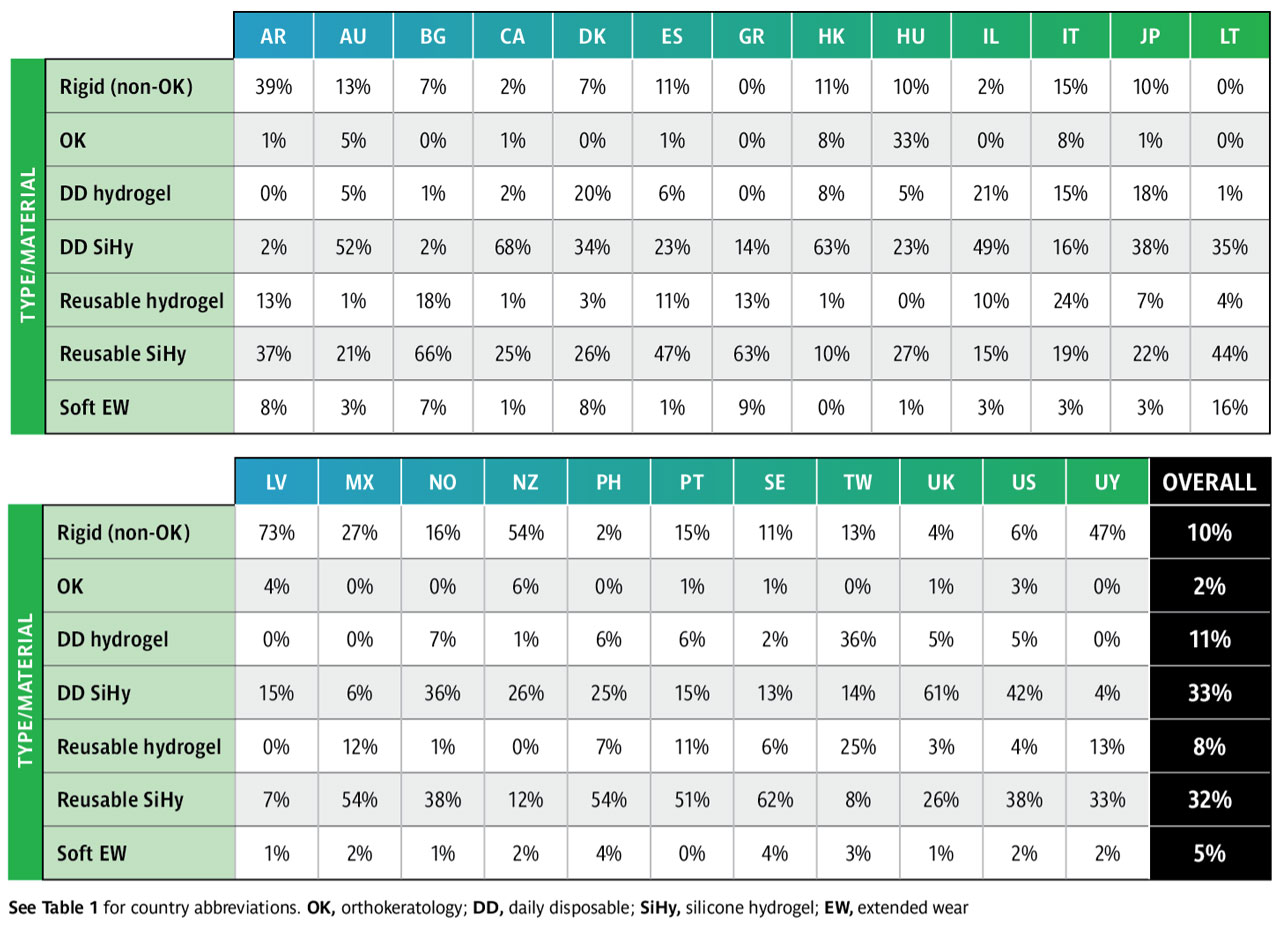
Table 2 shows the breakdown of lens fits into 7 major lens categories. Soft lenses account for 88% of lens fits, with standard-design rigid corneal and scleral lenses (10%) and orthokeratology lenses (2%) making up the remainder. Daily disposables accounted for 44% of all fits in 2025, slightly ahead of daily wear reusables at 40%. Extended wear lenses were prescribed in 5% of cases.
Rigid Corneal and Scleral Lenses
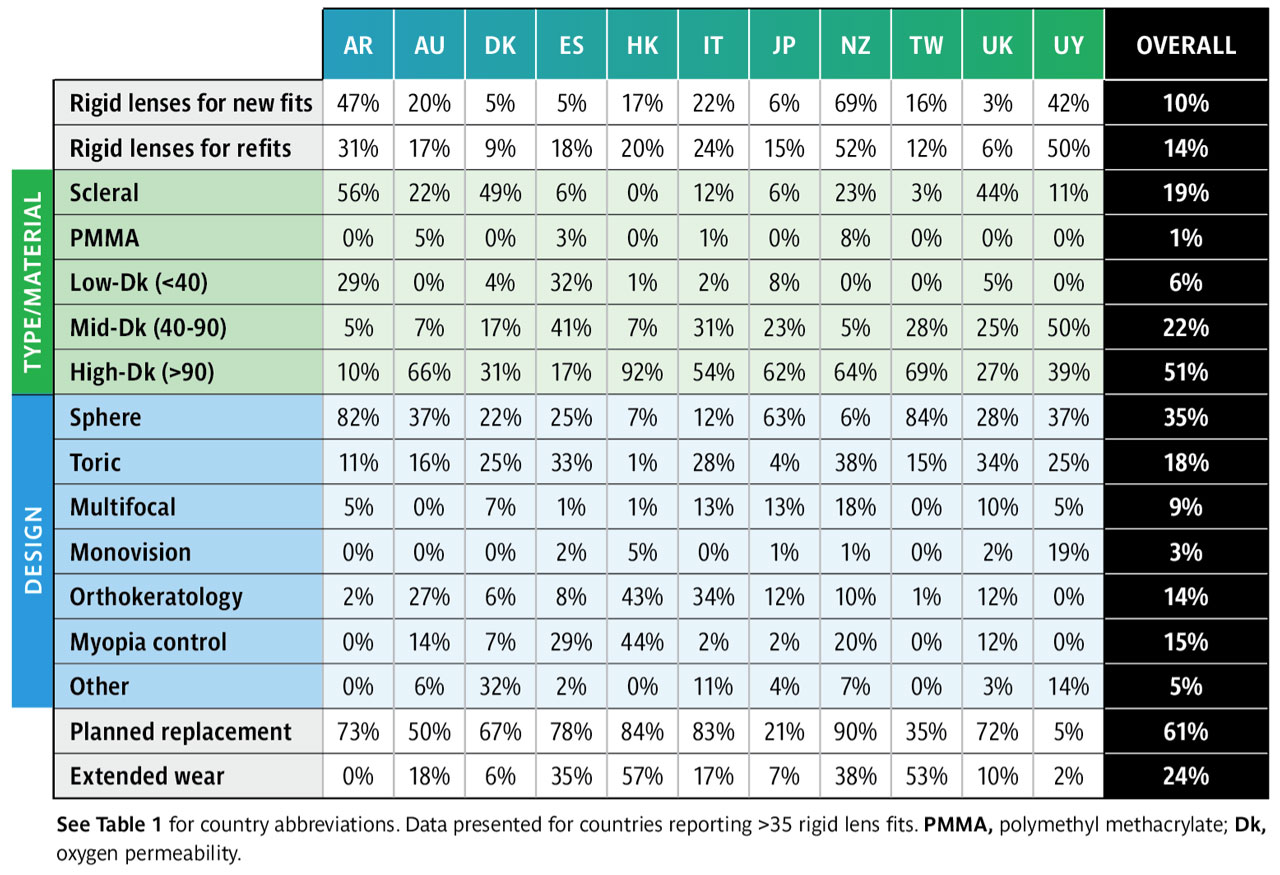
Further detail about rigid lens prescribing is provided in Table 3 for the 11 markets providing information about at least 35 lens fits. Scleral lenses now account for 19% of reported rigid lens fits, with mid-Dk materials (Dk of 40 to 90) the most popularly prescribed corneal lens type. The use of standard orthokeratology lenses varies considerably, with more than one-third of rigid lenses of this design prescribed in Hong Kong and Italy. A majority of rigid lenses (61%) were prescribed on a planned replacement basis.
Soft Lenses
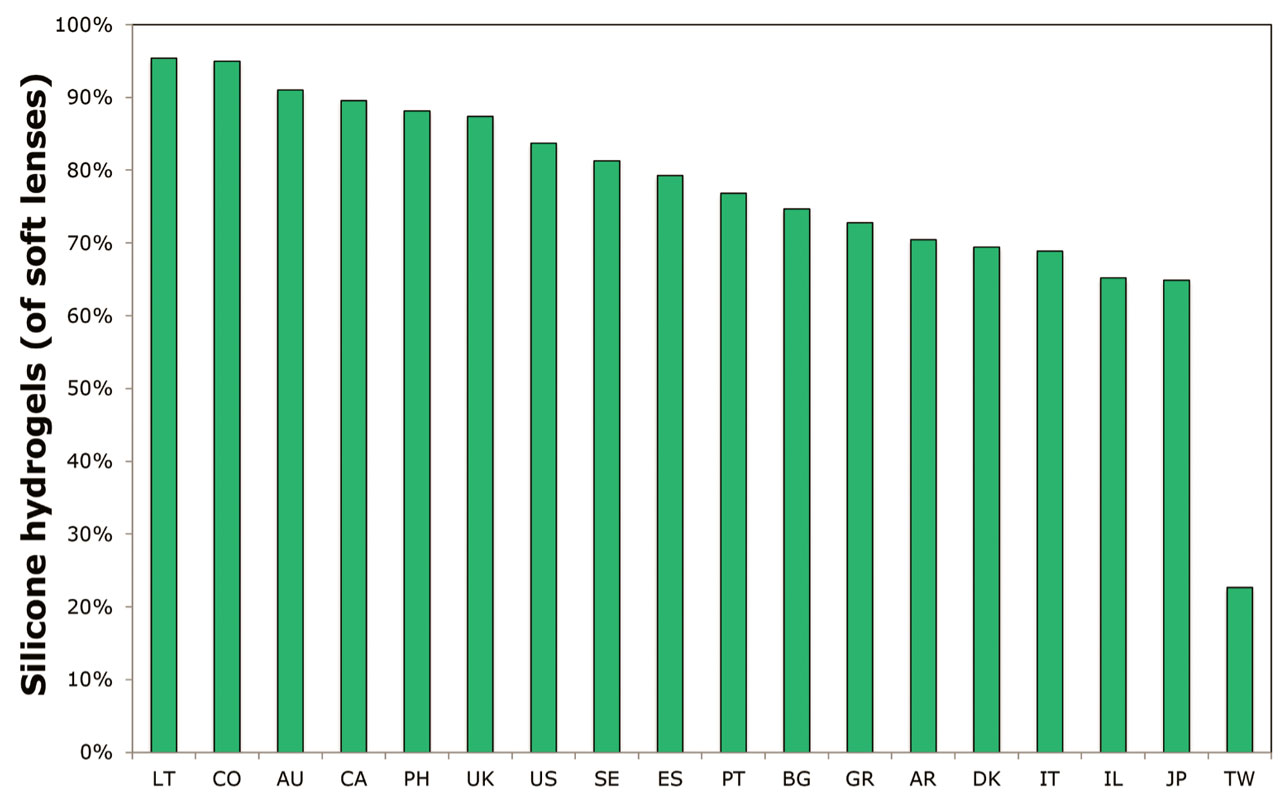
Silicone hydrogel materials were the most widely prescribed soft lens type (Table 4), at 78% of fits this year. Figure 2 shows the use of this material in 18 markets for which information about at least 1,000 fits has been reported for 2021 to 2025. Some markets, such as Lithuania and Colombia, are close to reaching a “saturation” of silicone hydrogel materials within the soft lens category, with most markets prescribing at least 70% of soft lenses as silicone hydrogels. The major outlier is Taiwan, where fits of this material type comprise only a small part of the market.
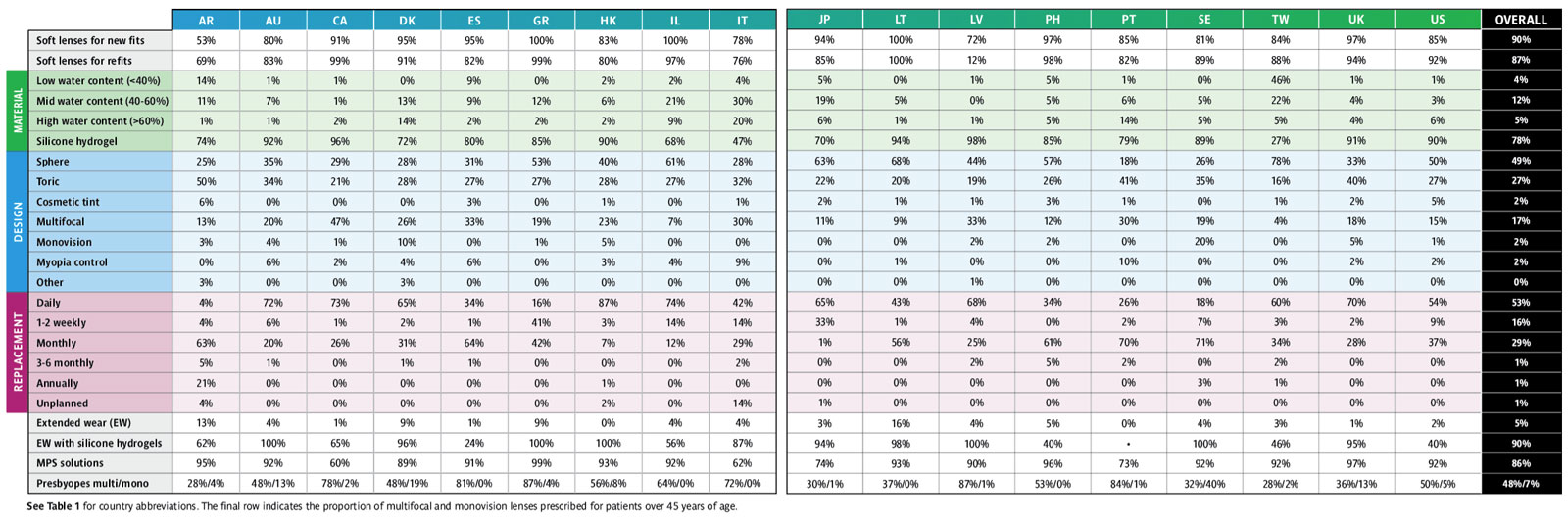
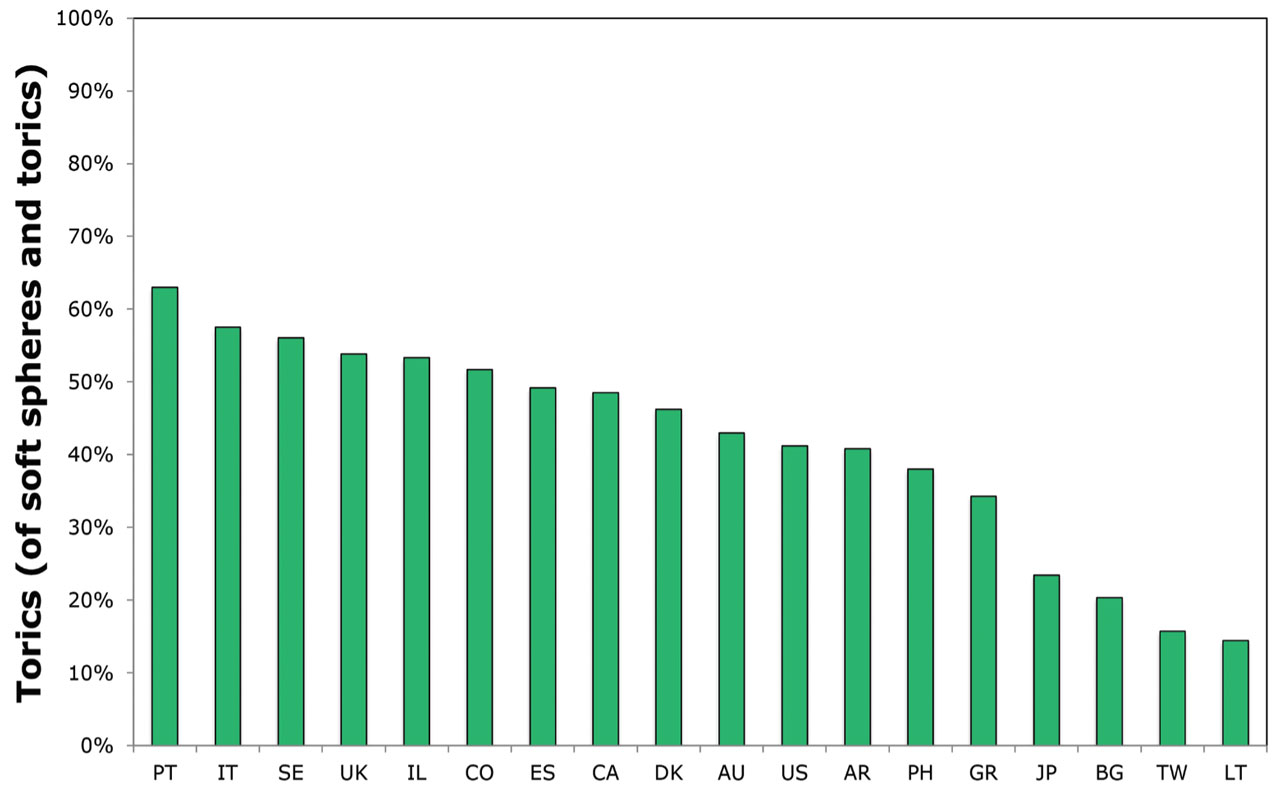
About half of all soft lenses prescribed in 2025 were spheres, with other lens fits spread across toric, cosmetically tinted, multifocal, monovision, and myopia control designs. Figure 3 shows the use of toric lenses within standard single vision lenses prescribed. The “expected” value here is around 50%, given that about half the population has a clinically significant level of astigmatism in at least 1 eye. Indeed, many markets are now achieving this level of toric lens prescribing, with 4 markets (Japan, Bulgaria, Taiwan, and Lithuania) revealing rather lower prescribing rates.
Multifocal lens designs accounted for 17% of all soft lens fits in 2025; of course, this proportion is much higher if only presbyopic fits (those to patients aged 45 years or older) are considered. The trends in multifocal prescribing to presbyopes since 2000 are shown in Figure 4. This chart shows 3 main phases: a low rate of fitting (about 30%) between 2000 and 2010, followed by a rapid increase to about 50% of fits in 2018, and then a slower rise.
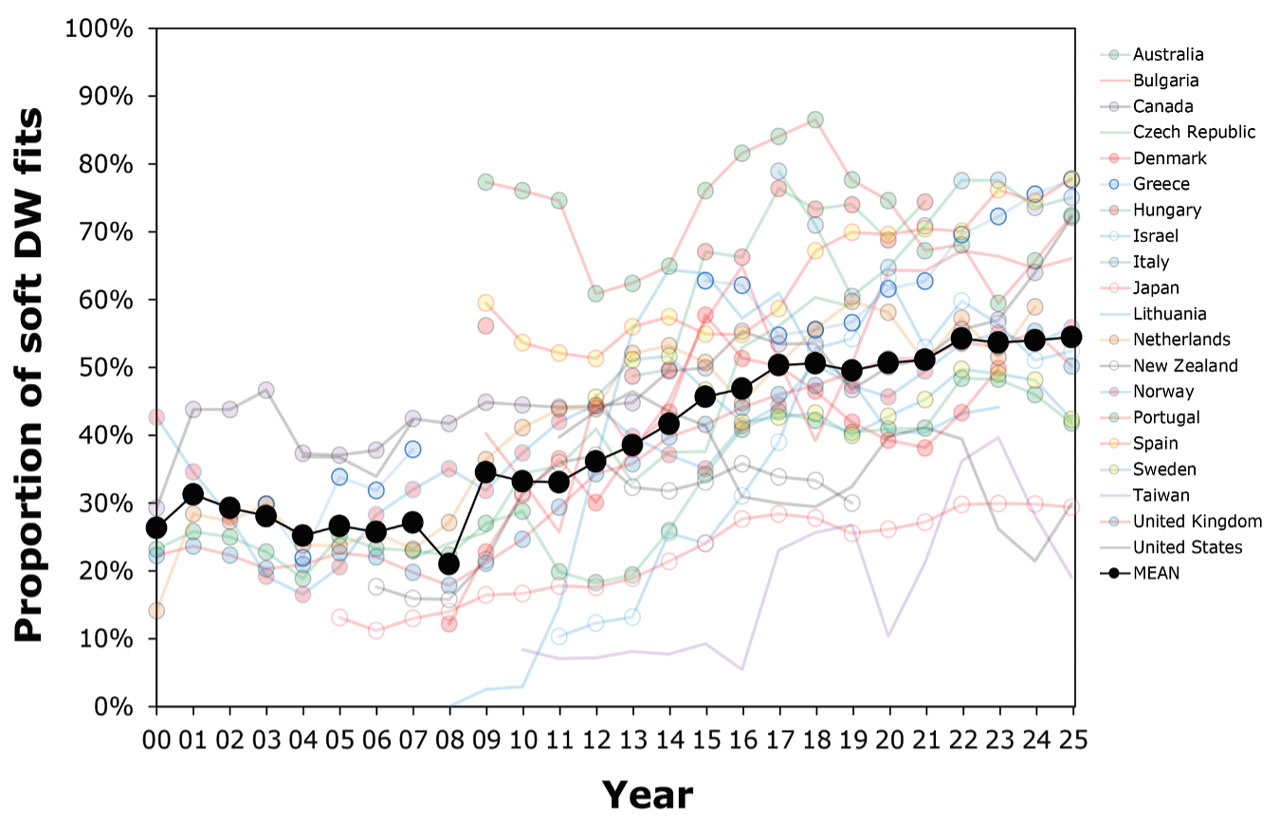
Although the increase in the use of multifocal lenses in this part of the patient base probably reflects better lens designs and improved confidence of practitioners, it seems that many presbyopes are still prescribed a simple “distance only” lens pair when fitted with contact lenses, given that monovision prescribing is much lower than that of multifocals. There continues to be great opportunity for new products in this part of the contact lens market.
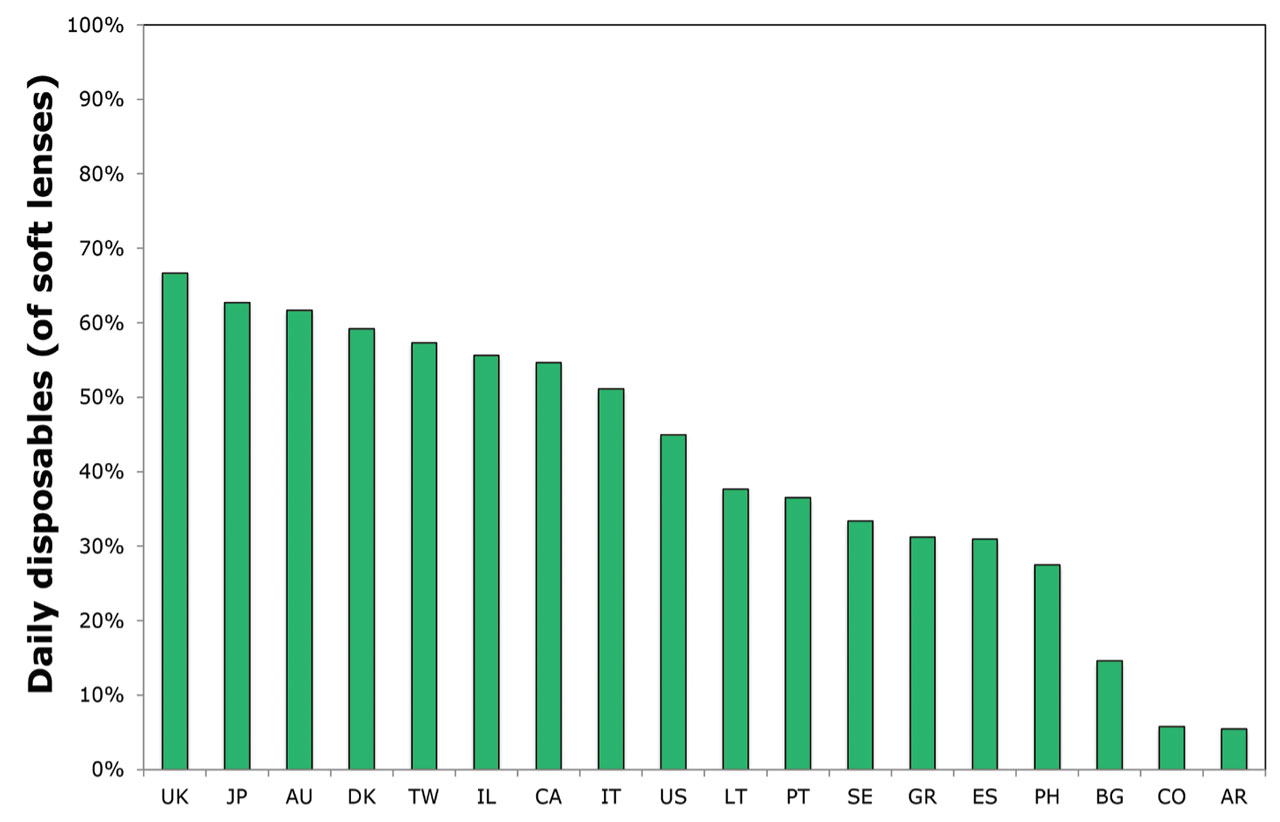
In 2025, daily disposable lenses accounted for just over half (53%) of soft lenses prescribed, whereas monthly lenses were the most commonly prescribed reusable lens type (29%). The use of daily disposable lenses varies markedly across countries. The United Kingdom heads the group of markets surveyed with 67% of soft lens patients fitted with this lens type in 2021-2025 (Figure 5). A number of markets report that about half of soft lens patients were prescribed daily disposables; their use appears to be rather lower in the Latin American markets studied.
The survey also captured that 5% of soft lens patients are prescribed lenses for extended wear (almost always silicone hydrogel materials) and 86% of patients using reusable daily wear lenses are prescribed multipurpose solutions.
Support: Funding and/or assistance was provided for the following markets: Australia – Optometry Australia; Bulgaria – Vision Protect Ltd; Greece and Israel – Johnson & Johnson Vision; Hong Kong – Hong Kong Association of Private Practice Optometrists; Latvia – Association of Latvian Optometrists and Opticians; New Zealand – NZERC; Spain – Spanish General Council of the Colleges of Opticians-Optometrists. The authors acknowledge the administrative support of Eurolens Research, University of Manchester, and the Centre for Ocular Research & Education (CORE) at the University of Waterloo.